


Abdul “Blue” Robinson: The Jacksonville Street Figure Who Testified Against His Son, Rapper Ksoo
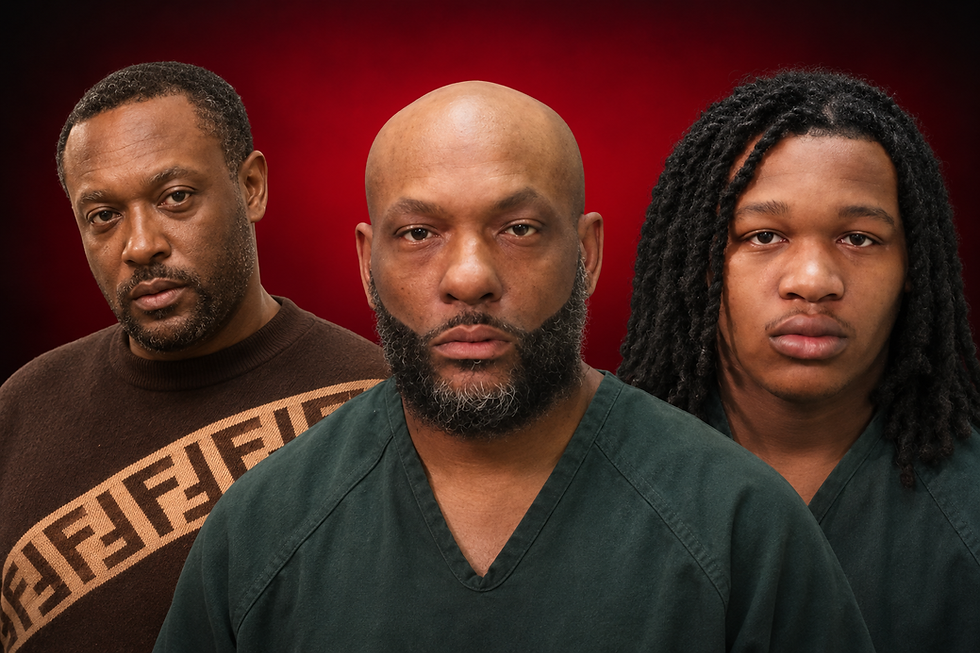
#KRITICIZM - Jacksonville, Florida, has developed one of the most controversial rap scenes in the South. The city’s music became known nationally for aggressive diss records, neighborhood rivalries and lyrics that often appeared to reference real-life violence.
Behind some of Jacksonville’s most recognizable artists was an older generation of street figures whose names were known long before the city’s drill scene reached YouTube.
One of those men was Abdul “Blue” Robinson Sr.
Robinson’s name became nationally recognized because of his sons, Jacksonville rappers Hakeem “Ksoo” Robinson and Abdul “ATK Teco” Robinson Jr. However, Blue already had his own history with Jacksonville law enforcement and the federal criminal-justice system.
His story eventually took its most controversial turn when he accepted a plea agreement and testified against Ksoo during his son’s 2025 murder trial.
The decision divided observers across social media. Some viewed it as an unforgivable violation of the street code. Others saw an older man facing a potential lengthy sentence who made a desperate decision to regain his freedom and return to his younger children.
Either way, the testimony became one of the most shocking moments in Jacksonville rap history.
Blue’s Earlier Jacksonville Reputation
Before Jacksonville rappers began accumulating millions of views, Abdul Robinson was reportedly known in the city’s street world by the nickname “Blue.”
His history with authorities stretched back decades. In 1999, Robinson was arrested during a drug investigation involving cocaine trafficking. A Tampa Bay Times report from that period identified him as one of three alleged drug dealers arrested in Jacksonville.
The newspaper later reported that Robinson received a 21-year prison sentence connected to the case. That conviction became an important part of the public narrative surrounding him.
Years later, Jacksonville Sheriff Mike Williams described Robinson as a longtime criminal figure when announcing new arrests in September 2020. Those statements were law enforcement’s characterization of Robinson, not independent proof of every claim later repeated on social media.
What is clear is that Blue’s name was familiar to Jacksonville investigators long before his son Ksoo became a nationally discussed rapper.
The Rise of Ksoo
Hakeem Robinson began building his name in Jacksonville under the rap name Ksoo.
He became associated with ATK, a collective linked musically to Jacksonville star Yungeen Ace. Ksoo attracted attention through confrontational records, unapologetic lyrics and a social-media presence that leaned heavily into the city’s existing rivalries.
As Jacksonville’s rap scene grew, so did the consequences surrounding it.
Music, neighborhood conflicts and homicide investigations began overlapping. Lyrics and videos were examined by fans, rivals and law enforcement. Online audiences treated actual deaths like entertainment, choosing sides and turning local tragedies into national content.
Ksoo became one of the most discussed figures in that environment.
His father, meanwhile, remained connected to the story behind the scenes. That changed following the January 2020 killing of Charles “Lil Buck” McCormick Jr.
The Killing of Charles McCormick
On January 15, 2020, 23-year-old Charles McCormick Jr. was shot and killed at an Arlington shopping center in Jacksonville.
An off-duty police officer witnessed the attack and pursued the fleeing vehicle until it crashed. According to local reporting, the occupants abandoned the vehicle and ran from the scene.
Investigators later charged Ksoo and his cousin, Leroy “ATK Scotty” Whitaker Jr., with first-degree murder. Prosecutors accused the two men of participating in the daytime ambush.
Abdul Robinson Sr. was not charged with personally killing McCormick. Authorities instead accused him of helping individuals escape following the shooting.
Robinson was arrested in September 2020 and charged as an accessory after the fact. The prosecution maintained that he assisted his son’s associates after the homicide.
The case placed Blue, Ksoo and other members of their family inside the same criminal prosecution. It also created a decision that would permanently change the relationship between father and son.
Blue Accepts a Plea Agreement
Facing substantial prison time, Abdul Robinson Sr. reached an agreement with prosecutors.
As part of the deal, he pleaded guilty to an accessory charge and agreed to testify during Ksoo and Whitaker’s trial. In exchange for his cooperation, the maximum sentence he faced was reduced to 20 years.
Without that agreement, Robinson reportedly faced the possibility of a much longer sentence.
For years, the public knew that Blue might testify against his son. Still, many people questioned whether he would actually take the witness stand when the moment arrived.
In July 2025, he did.
A Father Testifies Against His Son
Abdul Robinson Sr. entered the courtroom and testified for the prosecution during Ksoo’s murder trial.
He identified his son as the person seen in surveillance evidence connected to McCormick’s killing. Robinson also discussed the events surrounding the escape from the crime scene and the assistance allegedly provided afterward.
The moment immediately spread across social media.
This was not simply another witness identifying a defendant. It was a father providing testimony that prosecutors could use to convict his own child of first-degree murder.
Robinson acknowledged the weight of his choice. He told jurors that cooperating was the hardest decision he had ever made.
He also explained that his health and younger children influenced him. Robinson said he had two six-year-old children and an eight-year-old daughter whom he wanted an opportunity to raise. After spending years in custody and facing the possibility of decades more, he chose the agreement that offered him a chance to return home.
His explanation did little to quiet the debate.
Survival or Betrayal?
In street culture, few actions receive more condemnation than cooperating with prosecutors. That belief becomes even stronger when the person providing information is testifying against a relative.
Critics argued that a father should never help the state convict his son, regardless of the sentence he personally faced. They believed Blue should have accepted the consequences without taking the witness stand.
Others saw the situation differently.
They argued that street loyalty does not erase personal responsibility. From that perspective, Robinson was an aging man with serious health concerns who did not want to spend the remainder of his life incarcerated for helping other adults after a crime.
The controversy also raised a deeper question: What obligations exist between people when everyone involved is facing life-changing consequences?
There is no simple answer.
The streets promote loyalty as an absolute rule, but the criminal-justice system is designed to place enormous pressure on defendants. Prosecutors frequently offer reduced sentences in exchange for testimony, forcing people to choose between protecting associates and protecting themselves.
Blue made his choice publicly, and that decision will remain attached to his name.
Ksoo Is Found Guilty
On July 31, 2025, separate juries found Ksoo and Leroy Whitaker guilty of first-degree murder in McCormick’s death.
The verdict followed seven days of testimony. Jurors deliberated for approximately three and a half hours in Ksoo’s case before reaching their decision.
Both men were later sentenced to life in prison.
Ksoo also faced a separate prosecution connected to the 2019 killing of 16-year-old Adrian Gainer Jr., who was known as Bibby. That case further demonstrated how deeply Jacksonville’s music rivalries and homicide investigations had become connected.
Although Blue’s testimony became one of the trial’s biggest headlines, the jury heard additional evidence and multiple witnesses. His cooperation was significant, but it should not be described as the only evidence responsible for the verdict.
Abdul Robinson Jr. Also Takes a Plea
The case affected another of Blue’s sons, Abdul Robinson Jr.
Robinson Jr. initially faced a first-degree murder charge in connection with McCormick’s death. Before trial, he reached an agreement with prosecutors and pleaded guilty to being an accessory after the fact.
He received a 12-year prison sentence in October 2025.
The separate plea agreements involving father and son showed how prosecutors gradually dismantled the defendants’ united front. By the conclusion of the proceedings, some family members had agreed to cooperate while others received life sentences.
Blue Receives Time Served
On November 21, 2025, Abdul Robinson Sr. returned to court for sentencing.
He had faced a maximum of 20 years under the terms of his plea agreement. Instead, Judge Tatiana Salvador sentenced him to 1,898 days—the exact amount of time he had already spent incarcerated.
The sentence allowed Robinson to be released without serving additional prison time.
During the hearing, he apologized to McCormick’s family for his role in the aftermath of the killing. Robinson acknowledged the pain of losing a child and said that he understood how such a loss could permanently affect a family.
His release completed a dramatic transformation: Blue went from being described by authorities as a longtime Jacksonville crime figure to becoming a cooperating witness whose testimony helped prosecutors secure convictions against his son and nephew.
A Complicated Jacksonville Story
The story of Abdul “Blue” Robinson cannot be reduced to one label.
He was a father, a convicted drug offender, an alleged longtime street figure, a defendant and eventually a government witness. His life became connected to an era of Jacksonville rap in which music, internet fame and deadly neighborhood conflicts repeatedly intersected.
The MOBB TIES documentary on Abdul “Blue” Robinson explores the street history and allegations surrounding his name. However, the most reliable parts of his story remain the events established through contemporary reporting and court proceedings.
Blue’s testimony against Ksoo will likely remain the defining chapter of his public story. Some people will always remember him as a father who turned against his son. Others will see him as a man who finally rejected a code that had already cost his family years of freedom.
Behind the viral clips and courtroom arguments are multiple families permanently changed by violence.
Charles McCormick Jr. lost his life. Ksoo and Whitaker received life sentences. Abdul Robinson Jr. received 12 years. Blue spent more than five years behind bars before being released.
There were no true winners.
The story stands as a warning about what happens when street conflicts move from songs and social media into real life. Fame does not protect anyone from consequences, and loyalty becomes much more complicated when decades of freedom are at stake.
Abdul “Blue” Robinson walked out of jail, but the decision that opened the door will follow him for the rest of his life.
Reporting on the 2025 trial and sentencing is available from Jacksonville Today, Action News Jax and XXL.


Comments